.png?width=140&height=104&name=CENTRED-LOGO-PRIMARY-BLUE%20(1).png)
 The purpose of the EQ assessment
 The purpose of the EQ assessment
The EQ assessment is designed to show how you currently apply emotional intelligence in everyday life. It looks at your typical behaviours and responses across 15 EQ competencies, giving you a clearer picture of your strengths and the areas where you can grow. Rather than a pass-or-fail test, it serves as a reflective tool and a starting point for meaningful, ongoing personal development.
Where to find your assessment?

You can usually access your EQ assessment from within the Mygrow platform. Once available, it will appear in the "Assessments" or profile area of your account. If you are unsure where to find it, 👉Click here to go straight to the EQ Assessments page
How do you interpret your EQ assessment?
Your assessment results are there to help you reflect, not to label you. Use them to better understand how you respond to pressure, relationships, communication, and self-management. Higher scores may point to areas of confidence and consistency, while lower scores can reveal opportunities for focused growth. The most helpful way to interpret your results is to look for patterns, reflect honestly, and use the insights to guide your next steps in development.
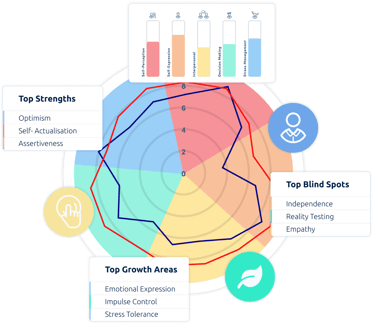
-1.png?width=144&height=144&name=EQ-assessment%20(1)-1.png) The EQ dashboard depicts your self-assessment in blue, and an average/aggregated score of the assessments of at least 5 others/peers in red. Higher scores mean that you were assessed as regularly displaying this competency, and may represent strengths in your EQ. Lower scores mean that you were assessed as seldom displaying this competency, and may indicate an aspect needing specific development.
The EQ dashboard depicts your self-assessment in blue, and an average/aggregated score of the assessments of at least 5 others/peers in red. Higher scores mean that you were assessed as regularly displaying this competency, and may represent strengths in your EQ. Lower scores mean that you were assessed as seldom displaying this competency, and may indicate an aspect needing specific development.
-1.png?width=144&height=144&name=EQ-assessment%20(1)-1.png) The EQ dashboard depicts your self-assessment in blue, and an average/aggregated score of the assessments of at least 5 others/peers in red. Higher scores mean that you were assessed as regularly displaying this competency, and may represent strengths in your EQ. Lower scores mean that you were assessed as seldom displaying this competency, and may indicate an aspect needing specific development.
The EQ dashboard depicts your self-assessment in blue, and an average/aggregated score of the assessments of at least 5 others/peers in red. Higher scores mean that you were assessed as regularly displaying this competency, and may represent strengths in your EQ. Lower scores mean that you were assessed as seldom displaying this competency, and may indicate an aspect needing specific development.

Why do peer insights matter?
Peer insights add an important layer of perspective to your assessment. Your peers are your friends, family, or colleagues who know you well.They can help you compare how you see yourself with how others experience you in practice. This can reveal blind spots, confirm strengths, and create a more balanced understanding of your emotional intelligence. When used constructively, peer feedback supports deeper self-awareness and more intentional growth.

How to Request for your peers to assess you?

-
Scroll down below your assessment graph where you'll find "Ask your peers to assess you"
- You'll have 3 options to choose from:
- Copy Link
- Whatsapp: this icon will redirect you to your WhatsApp account where you can share with your contacts
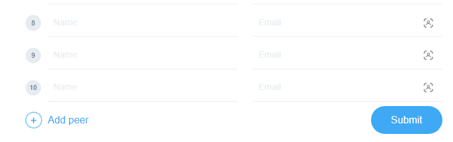
- Email: you'll get a dropdown view in list form to add the Names and their linked email addresses.
 To keep track of the number of peers who have completed the assessment, it is
recommended that you send your request via email
 To keep track of the number of peers who have completed the assessment, it is
How to track your peers to assess you?
As mentioned, only Once you have received all 5 peer reviews, the graph will be updated to indicate your self-assessment in comparison to your peer reviews. If it isn't showing up and you would like to find out who has completed the peer assessment.
To see who have and haven't assessed you :
-
Click the email icon beneath the graph
-
From here, you can:
 See who has already completed your peer review (there will be a green check/tick indicating that they've done theirs)
 See who is still outstanding (grey number on the left and a "resend" button on the right)
 Send reminders directly from the platform to the outstanding peer assessments by selecting the "resend Button"
-
 See who has already completed your peer review (there will be a green check/tick indicating that they've done theirs)
 See who is still outstanding (grey number on the left and a "resend" button on the right)
 Send reminders directly from the platform to the outstanding peer assessments by selecting the "resend Button"
If anything feels unclear or you’d like help inviting peers or completing the assessment, please let us know at support@mygrow.co.za —we'll be more than happy to guide you through it.